

Peter Chai
Download PDF
Dec 19 2025
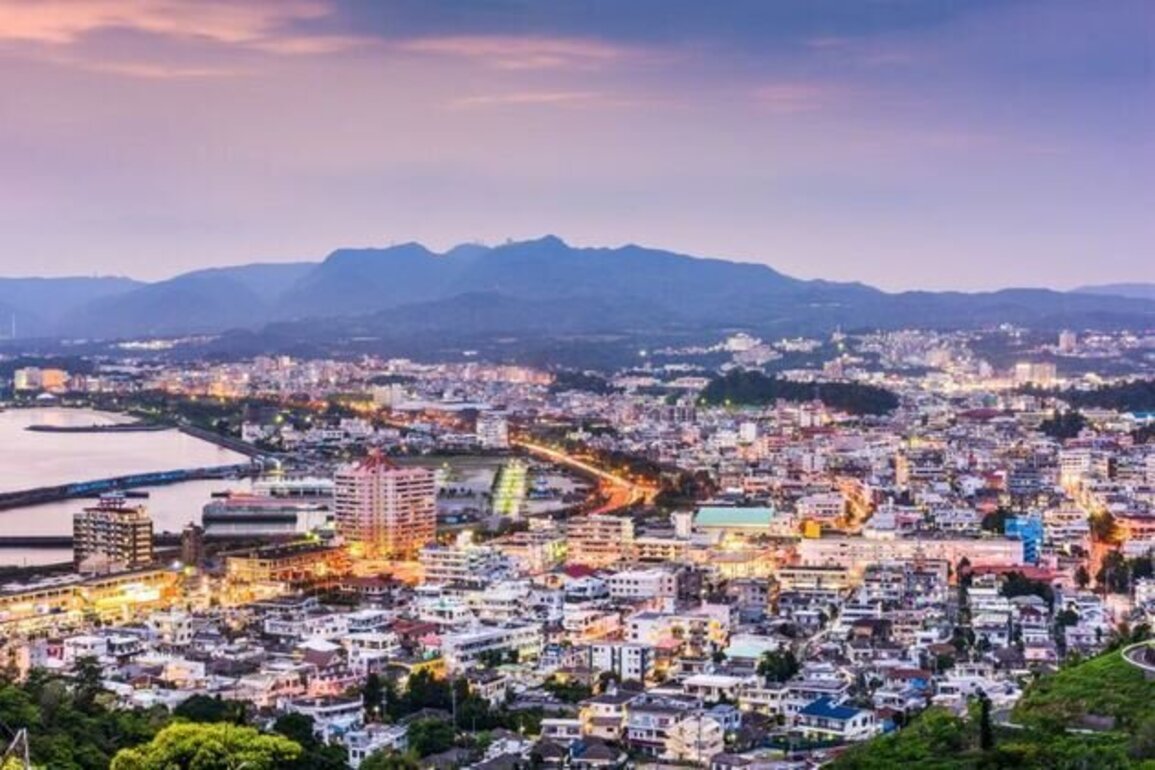
sepavone/DepositphotosWhen the U.S. occupied Japan from 1945 to 1952, it established military bases in Okinawa. When the occupation ended in 1952, Japan allowed the U.S. to retain control of the prefecture. The U.S. continued to expand its military bases in the prefecture until its handover to Japan in 1972. Japan now hosts the largest number of U.S. military personnel abroad. Okinawa accounts for just 0.6% of Japans land area and 1.1% of its population, yet ithostsmore than 70% of all U.S. military facilities in the country. Given this concentration, Okinawa was assumed to have more personal interaction with the U.S. military and to benefit economically from base-related activities. However, history has showed that neither social contact nor economic gains have translated into positive attitudes to the U.S. military. A complex mix of factorsincluding criminal incidents involving military personnel, environmental concerns such as water, air, and noise pollutions, training-related incidents, a sense of unfairness, and concerns about security riskshas fueled local resentment.
Apublic opinion pollin 2023 revealed that 70% of respondents agreed that its unfair that U.S. military bases are concentrated in Okinawa, and 83% agreed that military bases in Okinawa Prefecture would be targets of an attack in an emergency. Astudybased on two surveys comparing an Okinawan sample with a national sample also shows that people in Okinawa express significantly more negative views toward the U.S. military.
In November 2025, avideoshowing U.S. military police in Okinawa slamming an American civilian to the ground and trying to handcuff him as he shouts that they have no right to touch me went viral online. It raised concerns over the infringement of Japanese police authority outside U.S. installations and the risks of misidentifying civilians and tourists. Under the JapanU.S. security agreement, American military police may exercise authority only over service members and their families under specific conditions. Its authority does not extend to civilians, including U.S. citizens.
Since September 2025, U.S. military police has organized unilateral off-base patrols to enforce a ban on drinking in local nightlife districts between 1 a.m. and 5 a.m. The move followed severalsexual assault allegationsinvolving servicemen in 2024. The unilateral patrols were suspended after the viral video surfaced. In total,101 peoplewere arrested during 33 instances of unilateral off-base patrols and joint patrols with Japanese authorities. Sexual violence is not a new issue in Okinawa and has long fueled the islands anti-base movements. According to the Okinawa Women Act Against Military Violence (OWAAMV),350 crimes, including sexual violence, were committed by U.S. personnel against Okinawan women from 1945-2011. A recentanalysisof roughly 1,900 incidents recorded in Okinawa between 2005 and 2024 by the NHK found that nearly 60% were investigated as suspected sexual offenses, and that at least 14 of those cases were not clearly disclosed. From the start of 2025 through the end of September, U.S. military personnel in Okinawa were involved in 77 criminal cases resulting in arrests under Japans Penal Codealready surpassing the 2024 total.
In 1995, the gang rape of an Okinawan elementary schoolgirl by three servicemen triggeredprotestsand prompted the U.S. to pledge the closure of the Futenma air base, located in a densely populated area. The U.S. and Japan agreed to build a replacement facility near the remote town of Henoko. However, sex crimes involving U.S. military personnel did not end with the 1995 scandal, and incidents have continued to be reported by the mediaevery few years, with some involving female minors. In some cases, local district prosecutors chosenot to indictthe servicemen, and due to the strong need to protect the honor and privacy of those involved in the case, the reasons for their decisions were not disclosed. Sometimes, incidents were handled within the military and did not appear in Japans official statistics. In 2024, more than 25,00 people joined aprotestagainst sexual assaults by U.S. servicemen.
Anti-base activists have opposed the Henoko base, arguing that constructionpartly atop coral reefswouldpollutecoastal waters and destroy habitat for local wildlife. Years of anti-base protests and technical challenges have stalled the plan. As a result, the Henoko base remains only partially built, and Futenma base continues to operate. In 2024, close to 1,000 people joined aprotestagainst the restart of construction for a military runway being built into Oura Bay. On the other hand, PFAS contamination near U.S. military bases has been a major environmental concern in Okinawa. Since 2016, the Okinawa prefectural government has requested 6on-site inspections, but the U.S. military has approved only twoboth tied to incidents it acknowledged including a 2020 leak of 140,000 liters of firefighting foam at Futenma. In 2022, reports released by an Okinawa civic group based on test samples from 387 residents in 6 municipalities found that PFOS levels as much as three times the national average.
The contamination is also tied to financial burden. Between 2016 and 2024, the Okinawa prefectural government spent 3.2 billion yen on water testing and treatment. Prefectural officials estimate that managing PFAS over the next decade will require at least another 8 billion yen. Water bills are likely to increase not only due to inflation and aging water equipment but also due to the cost of managing PFAS. This added financial pressure has deepened public frustration, compounding the health concerns. Meanwhile, media has recently reported that U.S. military vehicles have driven on public roadswithout license plates, and parachutes used in training exercises havefallen into public areas, raising public safety concerns.
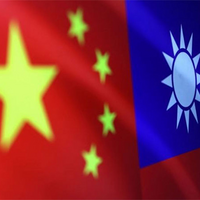
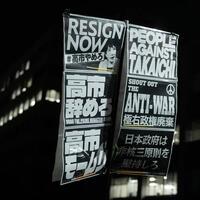
Japans first female prime minister, Sanae Takaichi, elected in October, is seeking toreviseJapans key security documents, including the National Security Strategy and raise Japans defense spending above 2% of GDP. She is also considering torevisethe not permitting introduction clause of the Three Non-Nuclear Principles, potentially involving more U.S. military presence in Japan. Her recentremarkin the Diet suggesting that a potential Taiwan crisis could constitute a survival-threatening situation triggered strong protests and punitive measures from China, including travel and study warnings, free flight cancellations and changes by airlines, a suspension of Japanese seafood imports, and the cancellation of performances by Japanese artists.
In December, China deployed a large number of naval and coast guard vessels across East Asian watersat one pointexceeding 100 ships. On 6 December, a fighter jet launched from the Chinese aircraft carrier Liaoning sailing over international waters southeast of Okinawa Prefecturedirected its radartwice at Japan Self-Defense Force aircraft. Some observers have suspected that Takaichis remark on Taiwan may have been intended to draw retaliation from China, heighten public awareness of security risks, and prepare the public to accept an expansion of Japans defense capabilities.
A Yomiurisurveyin December found that more than 60% of respondents agreed with expanding defense capabilities. A Sankeisurveyin November found that around 60% of respondents said Takaichis remark on Taiwan was appropriate. However,NIMBY (Not In My Backyard)resistance from local residents and governments could slow or even block new military installations. Although national support for strengthening Japans defense posture and the U.S.Japan alliance remains high, many citizens are unlikely to welcome military bases or advanced weapons systems being installed near their own communities. Also, their support may wane following the governments recent announcement that the increased defense spending will be funded through anincome tax hikein 2027.
National sentiment and local opinion can diverge sharply over military installations, and local resistance remains a key source of uncertainty for Takaichis plans to expand Japans defense capabilities, which will likely lead to more U.S. military involvement. It would be misguided for her to assume that strong national-level support for defense expansion and U.S.-Japan alliance will translate into minimal local resistance when new installations are proposed. Public opinion and historical experience in Okinawawhere long-standing opposition is rooted in issues such as sexual crimes involving military personnel and environmental damageillustrate this dynamic clearly. Similar sensitivities exist in Hiroshima and Nagasaki, where survivors and their families, shaped by the legacy of the atomic bombings, tend to hold more anti-militaristic views and show lower support for military expansion or the possession of nuclear weapons.
Further Reading on E-International Relations
- Opinion What a Stronger Japanese Military Posture Means for Okinawa
- Opinion Reassessing Military Misconceptions in the American-Japanese Alliance
- Opinion The US-Japan Alliance Continues to Stand for Democracy, Despite a Role Reversal
- Opinion Alliance Shock Revisited: What 1968-69 Means for 2025
- Opinion Toward a Japan-South Korea Alliance Less Reliant on the US
- Opinion Japans Military Awakening
About The Author(s)
Peter Chai(or Kai Shibata) is a Ph.D. Researcher at the Graduate School of Political Science, Waseda University, Tokyo. He holds a BA in Economics and MA in Political Science from Waseda University. His research areas are political sociology, comparative politics, and public opinion, with a focus on East Asia.
TagsJapanUnited States