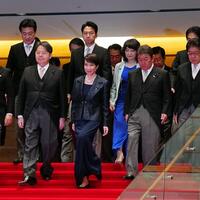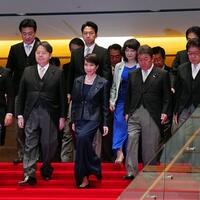



TOKYO/BEIJING: Japan moved on November 17 to ease rising tensions with China over Taiwan, after Beijing urged its citizens to avoid traveling to Japan. The dispute began when Prime Minister Sanae Takaichi told lawmakers earlier this month that a Chinese attack on Taiwan that threatened Japan's survival could lead to a Japanese military response.
Her statement broke with past Japanese leaders, who avoided speaking openly about such scenarios to prevent angering Beijing, which claims Taiwan as its own territory.
In an effort to calm the situation, Masaaki Kanai, the Japanese foreign ministry's top official for Asia and Oceania, traveled to Beijing to meet his Chinese counterpart, Liu Jinsong. Media reports said Kanai planned to explain that Japan's security policy has not changed and to urge China to avoid actions that harm bilateral ties.
Taiwan sits only about 110 km (68 miles) from Japan's westernmost island, Yonaguni, close to important sea lanes Japan relies on for energy imports. Japan also hosts the largest concentration of U.S. military forces outside the United States.
Japan's Chief Cabinet Secretary said communication channels with China remain open and confirmed that Tokyo has firmly asked China to take "appropriate steps." He added that China's travel warning goes against efforts to build "strategic, mutually beneficial ties." However, China's foreign ministry said Premier Li Qiang will not meet Takaichi at the G20 summit in South Africa. Instead, spokesperson Mao Ning said Japan should retract its "wrongful" comments.
Taiwan's President Lai Ching-te said China was carrying out a "multifaceted attack" on Japan. He urged other nations to pay attention and called on Beijing to act responsibly, not as a "troublemaker" for regional stability.
Relations worsened quickly after Takaichi's November 7 remarks, made just a week after she met Chinese President Xi Jinping to discuss stable ties. A day later, China's consul general in Osaka, Xue Jian, posted a message on X saying "the dirty neck that sticks itself in must be cut off." Japan summoned China's ambassador to protest what it called an "extremely inappropriate" remark, and some Japanese lawmakers demanded Xue's removal.
China then summoned Japan's ambassador on November 13 to lodge a strong protest—its first such move in more than two years. The next day, Beijing warned that Japan would face a "crushing" military defeat if it intervened over Taiwan and expressed concern about Japan's security posture, including ambiguity over its long-standing "three non-nuclear principles." A Reuters investigation in August found Japan may be showing greater openness to easing those principles.
Tensions spilled into territorial disputes as well. On November 16, Chinese coast guard ships entered waters around the East China Sea islands claimed by both countries. Japan's coast guard said it drove the ships away. Japan also scrambled fighter jets on November 15 after China flew a drone between Taiwan and Yonaguni.
The U.S. ambassador to Japan, George Glass, criticized Xue's comments online but later said it was time to move on, joking that "Halloween has been and gone" after Xue called Takaichi an "evil witch."
If the dispute continues, Japan could face a steep drop in Chinese tourism, similar to the 25 percent plunge during a 2012 island dispute.